Tropical-style landscaping has an image problem in a dry state: lush foliage looks thirsty. The reality in 2026 is more interesting, and it starts with the numbers coming out of the state’s water managers. By late spring, the Department of Water Resources had raised the State Water Project allocation to 45 percent of requested supplies, up from 30 percent earlier in the year.
An allocation moving up is good news, but the framing around it is the real signal. The increase followed a wet December that managers were careful not to oversell, with officials noting a dry January, limited northern Sierra snowpack, and Colorado River reservoirs still near historic lows. The message to Southern California was relief, not resolution.
For homeowners drawn to a tropical look, that mixed picture is shaping a smarter version of the style, one built to read lush while staying water-aware.
Why Tropical and Drought-Aware Are Not Opposites
The instinct that tropical means high water is half right. The look depends on bold foliage, layered heights, and a sense of fullness, but those visual cues do not all require thirsty plants. Much of the effect comes from leaf shape and arrangement, not from constant irrigation.
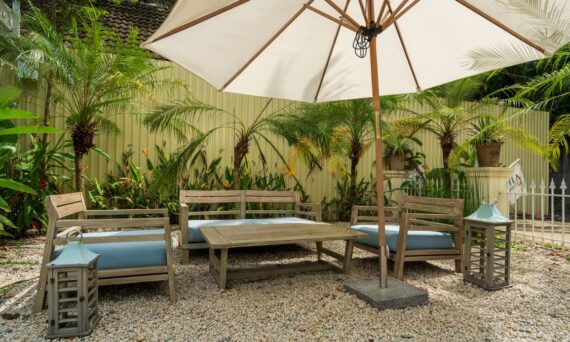
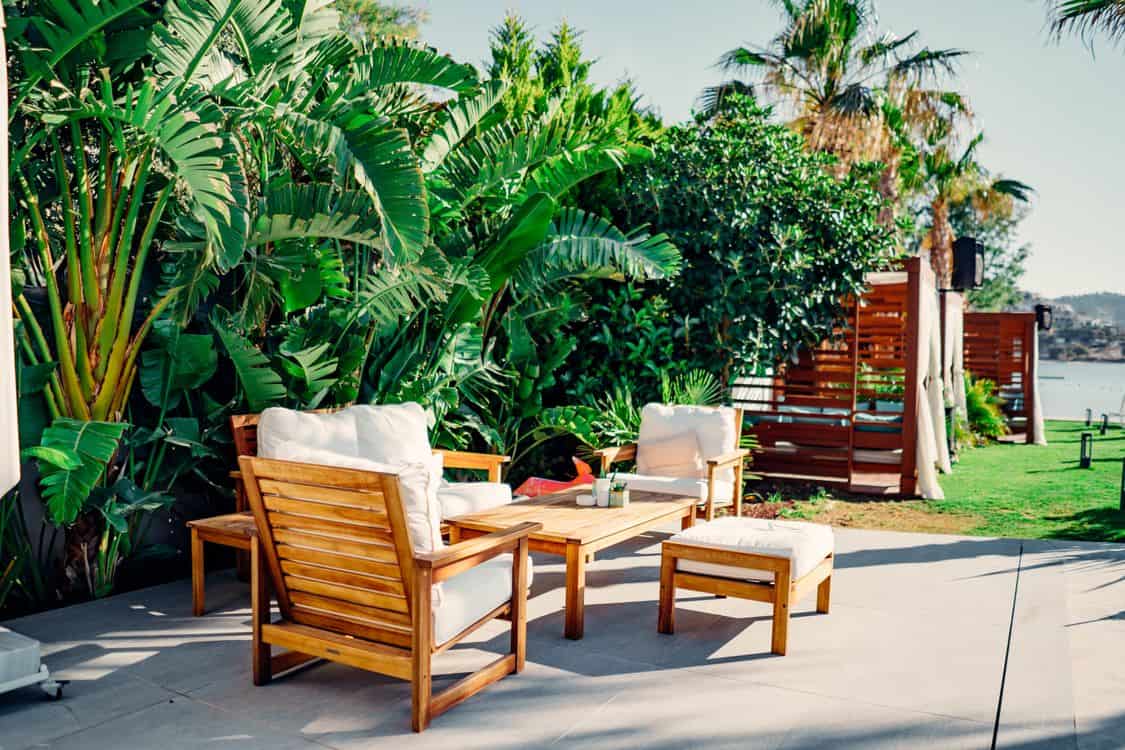
San Diego County’s Mediterranean climate, with its dry summers and mild winters, actually supports a long list of subtropical plants when they are placed correctly and grouped by water need. Palms add height and structure, bird of paradise delivers bold form in both coastal and inland yards, and species like ti plants and elephant ear supply the broad-leaf drama in the right microclimates.
The discipline is in the grouping. Hydrozoning, putting plants with similar water needs together, lets the thirstier specimens cluster where irrigation is efficient while the rest of the yard leans on low-water material. Done well, the eye reads a unified tropical scene; the water bill reads something far more modest.
Ground treatment carries some of the load, too. Mulch holds soil moisture, drip irrigation delivers water to roots instead of air, and surfaces like decomposed granite and stone keep paths cool without demanding a drop. These are not compromises to the look; they are the substructure that makes it sustainable.
Designing Around an Uncertain Supply
The state’s own posture, treating an improved allocation as temporary relief rather than an all-clear, is the right model for a homeowner planning a yard. The smart assumption is that water will be available but never to be wasted, and the design should hold up whether the next winter is wet or dry.
That argues for a backbone of plants that thrive on little, accented by a smaller number of higher-water statement specimens. A few well-placed palms or a single dramatic broad-leaf grouping can carry the tropical impression, while the surrounding planting stays lean. The contrast is what sells the style; you do not need the whole yard to be thirsty.
Water features follow the same thinking. The tropical vocabulary loves the sound of moving water, and recirculating systems, pondless waterfalls, wall fountains, and narrow basins, deliver that atmosphere while limiting waste. A feature that loops its water reads as lush without behaving like a leak.
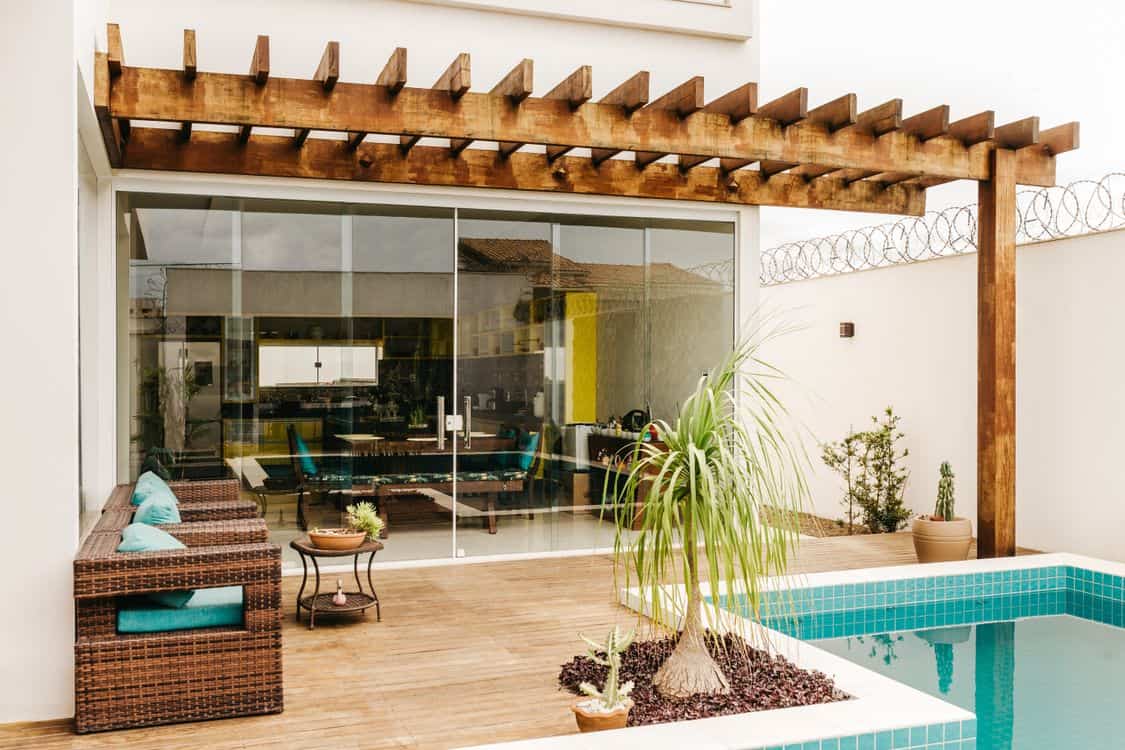
Shade is the quiet multiplier. Pergolas, shade sails, and well-placed tall plants cut evaporation and reduce the heat stress on both people and plants, especially in the warmer inland parts of the county. A shaded planting bed simply needs less water than one baking in full afternoon sun.
What This Means for Homeowners This Year
For anyone planning a tropical-style project in San Diego County, the takeaway is not to abandon the look. It is to build it on a water-aware frame from the start, because retrofitting conservation into a thirsty design later is harder and more expensive than designing for it up front.
Start with the plant palette and the hydrozones, settle the irrigation method, and treat the highest-water elements as deliberate accents rather than the default. A yard built this way tends to stay healthier through dry stretches and looks intentional rather than stressed when restrictions tighten.
It is worth remembering that allocations and local rules can move in either direction from year to year, and a single agency figure is not a forecast for your own water district. Homeowners should confirm current local watering rules before committing to a planting plan, since those rules, not the statewide allocation, govern what happens in a given yard.
The larger pattern is clear enough, though. The tropical yards being built in the county now are quieter about their water use than the ones built a decade ago, and they look just as full. The style adapted to the climate, which is exactly what good landscape design is supposed to do.
Part of that adaptation is regional, too. A coastal yard near the ocean can lean on salt-tolerant species and layouts that welcome airflow, while an inland property contends with hotter afternoons that make shade and careful plant spacing more important. The same tropical vocabulary gets tuned differently depending on which part of the county a home sits in.
Long-term care is where these designs prove themselves. Slow-growing plant varieties, mulch to hold soil moisture, and irrigation grouped by need keep a mature tropical yard manageable rather than demanding. A scene that looks effortless after a few years is almost always one that was planned for low upkeep from the first day, not one that happens to stay lush by luck.